In this guide
- Confirm the destination and preparation Check the exact location through the provider's current official instructions. A health-system name alone is not a destination. Ask the care team what the person should bring and whether any preparation is required. Do not create your own fasting, medication or transport instruction from a general article.
- Separate arrival, waiting and return Confirm who provides each part of the journey. The person driving outward may not be available afterward. A booked ride may have limits on waiting, assistance or schedule changes. Ask the provider about those terms directly instead of assuming that “transport arranged” covers the whole event.
- Plan for information after the visit Ask who the adult wants included in the conversation and how follow-up instructions will be obtained through the provider's approved process. A family text saying “all done” may not tell the next helper what administrative task remains. At the same time, a full clinical summary may be unnecessary for someone only arranging a ride.
- Make the workplace request concrete Once you understand the known times and uncertainties, ask about the actual work conflict through the employer's current route. Avoid promising a return time that the care arrangement cannot support. Schedule changes, leave, pay and coverage can be separate decisions.
- Close with the next task Afterward, identify only the follow-up tasks that the adult and care team have agreed on: a scheduling call, an approved document request or another administrative step. Assign a willing person and confirm when it needs attention. Clinical instructions should remain exactly as provided by the qualified care team.
- Sources and scope
The appointment time is only one point in a longer journey. A caregiver may need to clarify preparation, arrange transport, accompany the adult if they want support and understand what follow-up the care team expects. For a Northwell employee, the workday question is often the total arrangement and its uncertainty, not simply the printed visit time.
This article helps organize questions. It does not estimate a clinical visit's duration, recommend treatment or determine whether a person can travel independently. Those matters belong to the adult, the care team and the appropriate service provider.
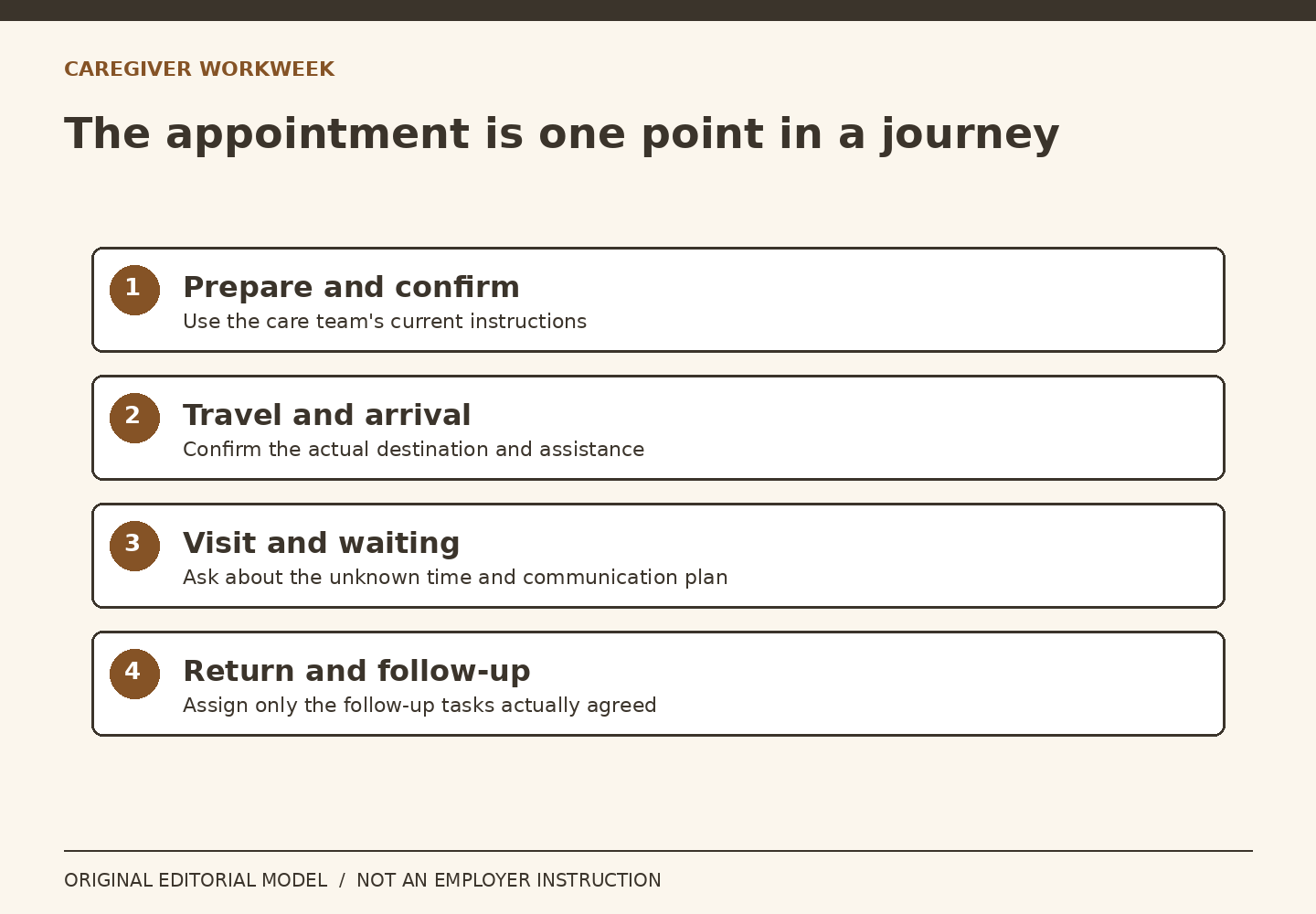
Confirm the destination and preparation Check the exact location through the provider's current official instructions. A health-system name alone is not a destination. Ask the care team what the person should bring and whether any preparation is required. Do not create your own fasting, medication or transport instruction from a general article.
With the adult's permission, prepare a short question list. AHRQ's Questions Are the Answer resource supports preparing for healthcare conversations. The useful list reflects what the person wants to understand, rather than replacing their voice with the caregiver's priorities. If there are too many questions, ask the care team how to address the remaining ones.
Separate arrival, waiting and return Confirm who provides each part of the journey. The person driving outward may not be available afterward. A booked ride may have limits on waiting, assistance or schedule changes. Ask the provider about those terms directly instead of assuming that “transport arranged” covers the whole event.
In an original example, a relative can bring an adult to a late-morning visit but must leave for work. The family still needs to clarify whether someone will accompany the adult, how the return is arranged and what happens if the visit runs longer. The answer depends on the adult's needs and the care team's instructions, not on a standard buffer invented by this publication.
Plan for information after the visit Ask who the adult wants included in the conversation and how follow-up instructions will be obtained through the provider's approved process. A family text saying “all done” may not tell the next helper what administrative task remains. At the same time, a full clinical summary may be unnecessary for someone only arranging a ride.
Do not use your employee access or professional familiarity to view a relative's records outside the authorized patient process. Being a Northwell worker does not erase patient privacy boundaries. Ask the provider about proxy or representative arrangements when relevant.
Make the workplace request concrete Once you understand the known times and uncertainties, ask about the actual work conflict through the employer's current route. Avoid promising a return time that the care arrangement cannot support. Schedule changes, leave, pay and coverage can be separate decisions.
Northwell's public Benefits page describes family and well-being resources, including dependent-care assistance. It does not establish that a particular appointment arrangement is covered for you or that a provider is available. Confirm current terms before building the workday around a resource.
Close with the next task Afterward, identify only the follow-up tasks that the adult and care team have agreed on: a scheduling call, an approved document request or another administrative step. Assign a willing person and confirm when it needs attention. Clinical instructions should remain exactly as provided by the qualified care team.
A well-planned journey reduces avoidable uncertainty while respecting that healthcare can be unpredictable. It is a conversation structure, not a guarantee that a visit will fit neatly between two work obligations.
Sources and scope
Public sources checked October 5, 2026. Dated accounts remain historical; examples and planning methods in this article are original editorial constructions.
- AHRQ: Questions Are the Answer
Public resources for preparing questions for healthcare conversations; no individualized medical advice.
- Northwell: Benefits and TeamWell
Public overview checked October 5, 2026; employer and provider terms determine current eligibility, availability, cost and scope.