In this guide
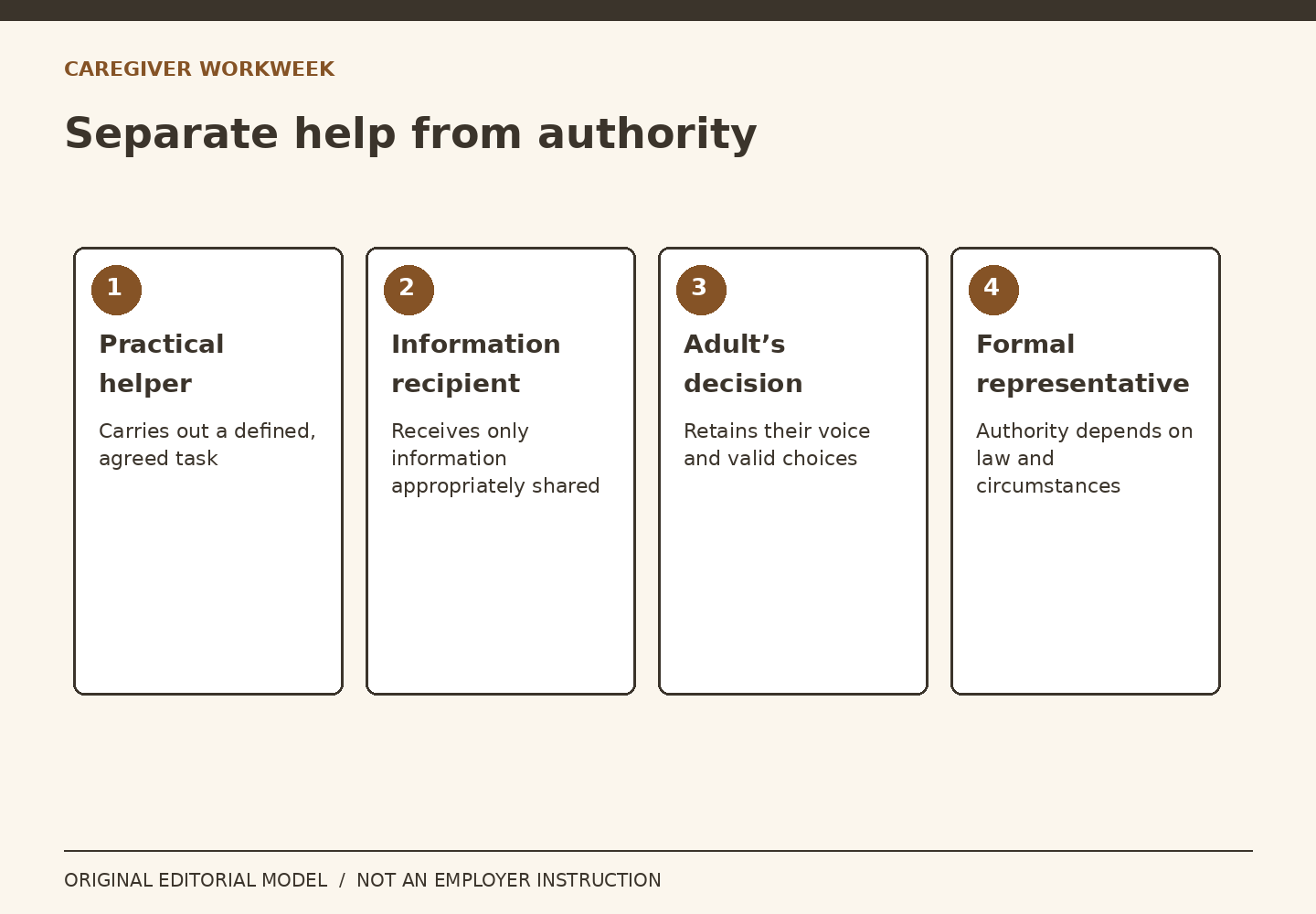
- Start with the adult's preferences When the adult can make the relevant decision, ask what help they want and who they want involved. A person may choose one relative for transport, another for appointment notes and nobody else for a private conversation. Do not treat the shared workload as permission to share every detail with the whole family.
- Separate practical help from formal representation HHS distinguishes family involvement in care from the role of a personal representative. The details depend on law and circumstances. This publication does not turn those general descriptions into a legal test or a form to sign.
- Ask about information at the point of use Before a call, clarify the question, the recipient and the information needed. The relative arranging a meal delivery may need an address and delivery instructions, but not a clinical history. The care team may need a different set of information. Permission and necessity should be considered for the actual exchange.
- Make disagreement visible without escalating it casually Relatives may disagree about what help is needed or who should be involved. A planning conversation can clarify the disagreement, but it cannot settle a legal or clinical question by majority vote. Pause the affected decision and seek the appropriate professional input.
- Review roles when circumstances change A hospital stay, a new service or a change in the adult's preferences may require a fresh conversation. Do not assume that a past arrangement applies forever or across every organization. Confirm what remains valid and what needs updating through the proper process.
- Sources and scope
Families often organize around the person who is most available, lives closest or works in healthcare. That person may become the practical coordinator without becoming the legal decision-maker or the person entitled to every record. For a Northwell team member supporting an adult loved one, keeping those roles distinct protects the adult's voice and makes requests to services clearer.
This is general educational information. It does not decide capacity, legal authority, access rights or a disputed family question. Ask the provider or a qualified legal professional about the actual situation and applicable law.
Start with the adult's preferences When the adult can make the relevant decision, ask what help they want and who they want involved. A person may choose one relative for transport, another for appointment notes and nobody else for a private conversation. Do not treat the shared workload as permission to share every detail with the whole family.
Respecting choice can require a less convenient plan. A caregiver's efficiency is not the only value at stake. If a preference raises a safety or capacity concern, bring that concern to an appropriate professional rather than quietly overriding it through a household arrangement.
Separate practical help from formal representation HHS distinguishes family involvement in care from the role of a personal representative. The details depend on law and circumstances. This publication does not turn those general descriptions into a legal test or a form to sign.
For planning, label the task rather than awarding a broad title. “Confirms the ride” says what someone does. “In charge of everything” creates ambiguity. If a service needs proof of authority, ask what its authorized process requires and use that route. Do not send identity documents or medical records to this publisher.
Ask about information at the point of use Before a call, clarify the question, the recipient and the information needed. The relative arranging a meal delivery may need an address and delivery instructions, but not a clinical history. The care team may need a different set of information. Permission and necessity should be considered for the actual exchange.
A Northwell employee should not use workplace access, personal contacts or a colleague's goodwill to bypass the loved one's patient process. Employee status is not a substitute for the provider's verification and disclosure rules. Use the same authorized routes that apply to the situation.
Make disagreement visible without escalating it casually Relatives may disagree about what help is needed or who should be involved. A planning conversation can clarify the disagreement, but it cannot settle a legal or clinical question by majority vote. Pause the affected decision and seek the appropriate professional input.
An original example: two siblings agree that transport is needed but differ about whether one should attend the consultation. The first step is to ask the adult's preference and the provider's applicable process, not to decide that the sibling who arranged the ride must attend.
Review roles when circumstances change A hospital stay, a new service or a change in the adult's preferences may require a fresh conversation. Do not assume that a past arrangement applies forever or across every organization. Confirm what remains valid and what needs updating through the proper process.
A clear role map lets people help without pretending that support, record access and decision authority are the same thing. It also gives the caregiver a boundary: being dependable does not mean being authorized or able to decide everything.
Sources and scope
Public sources checked October 5, 2026. Dated accounts remain historical; examples and planning methods in this article are original editorial constructions.
- HHS: Family Members and Friends
General federal privacy guidance; actual authority and permitted disclosure depend on applicable law and circumstances.
- HHS: Personal Representatives
General explanation of a legal role; this publication does not determine authority or provide legal advice.