In this guide
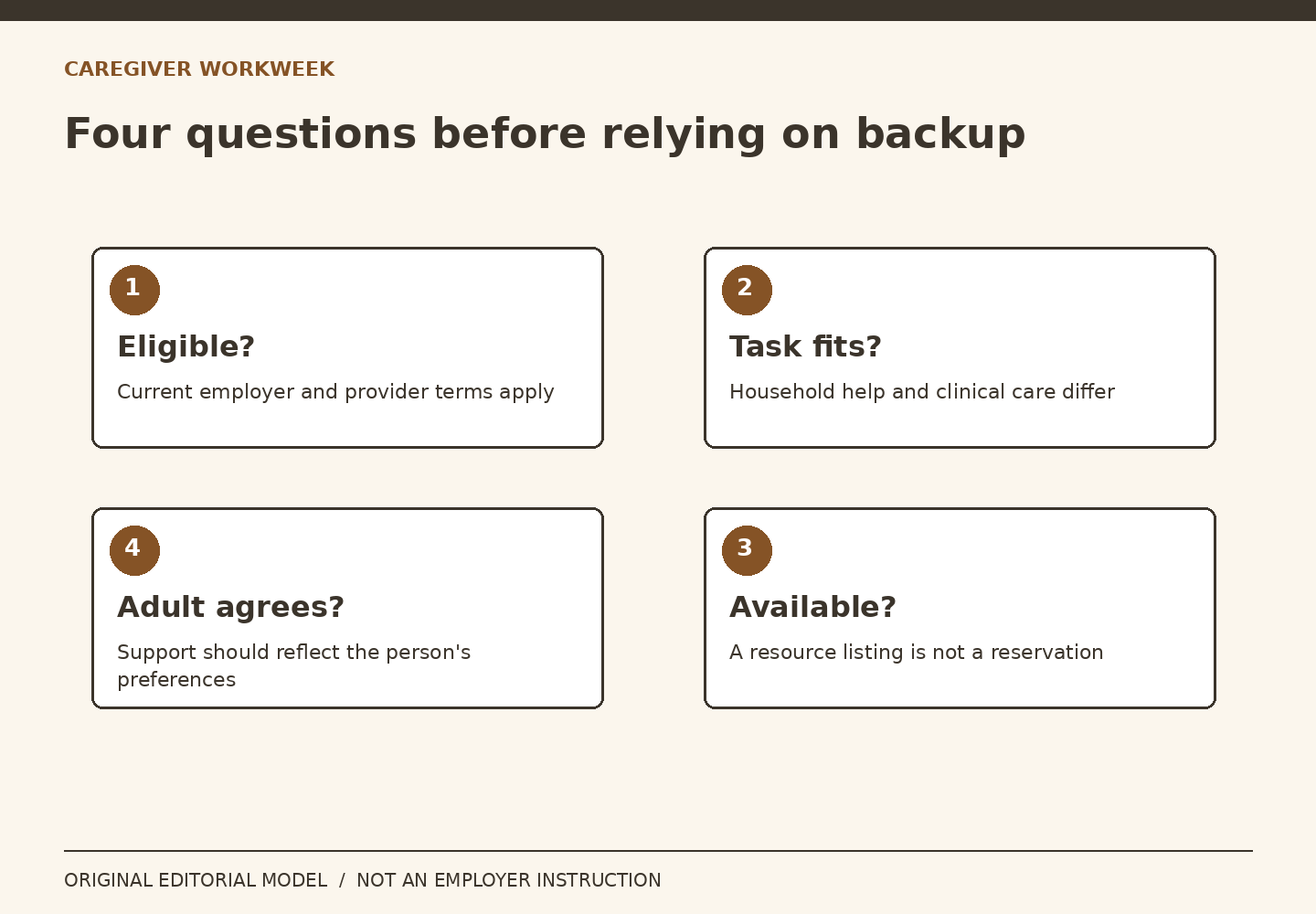
- Define the gap first What would the backup need to do, where and during which time window? Household assistance, companionship, transport and clinical care are not interchangeable services. Ask the care team when you are unsure what level of support is appropriate.
- Verify with the actual provider Ask about enrollment, current eligibility, geographic coverage, the tasks included, exclusions, timing and what happens if no provider is available. Confirm the full cost and cancellation terms before making a booking. Do not assume that a colleague's past use establishes your terms.
- Check the handoff itself A service being available is not the same as the adult agreeing to the arrangement. Discuss preferences, access to the home and the information the helper needs. Ask the provider how its staff receive instructions and how changes or concerns are handled.
- Keep a second question open The Administration for Community Living's caregiver-support program describes a separate public-resource pathway. Local services have their own rules and capacity; they are not interchangeable with an employer benefit. Ask about appropriate options without assuming that either route guarantees care.
- Sources and scope
A resource becomes a usable backup only when it fits the actual need and can be accessed under its current terms. A public benefit description can tell you that a category exists; it cannot reserve a provider or establish what help your adult loved one will receive. This distinction is important when a Northwell workday depends on the arrangement.
Define the gap first What would the backup need to do, where and during which time window? Household assistance, companionship, transport and clinical care are not interchangeable services. Ask the care team when you are unsure what level of support is appropriate.
Northwell's Benefits page lists Bright Horizons back-up care for children and elders. Treat that as a starting point for verification, not a guarantee of your eligibility, a number of available days, a price or local provider capacity. Those details can vary and change.
Verify with the actual provider Ask about enrollment, current eligibility, geographic coverage, the tasks included, exclusions, timing and what happens if no provider is available. Confirm the full cost and cancellation terms before making a booking. Do not assume that a colleague's past use establishes your terms.
Avoid sending health details to an unverified website. Use the employer's current authorized route to the provider, then share only what its legitimate process requires. This publication does not collect care requests or recommend a particular caregiver.
Check the handoff itself A service being available is not the same as the adult agreeing to the arrangement. Discuss preferences, access to the home and the information the helper needs. Ask the provider how its staff receive instructions and how changes or concerns are handled.
An original example: a family can obtain a short visit but needs support across a longer workday. The visit may still be useful, yet it does not fill the entire gap. Put the uncovered period back into the plan rather than labeling the day “covered.”
Keep a second question open The Administration for Community Living's caregiver-support program describes a separate public-resource pathway. Local services have their own rules and capacity; they are not interchangeable with an employer benefit. Ask about appropriate options without assuming that either route guarantees care.
A realistic backup plan includes what you will do if the preferred arrangement fails. That may require a new family, care-team or workplace conversation. The point is to know the limits before the difficult morning arrives.
Sources and scope
Public sources checked October 5, 2026. Dated accounts remain historical; examples and planning methods in this article are original editorial constructions.
- Northwell: Benefits and TeamWell
Public overview checked October 5, 2026; employer and provider terms determine current eligibility, availability, cost and scope.
- Administration for Community Living: National Family Caregiver Support Program
Public description of a state-supported caregiver program; local eligibility, services and availability are not determined here.